 vivi
vivi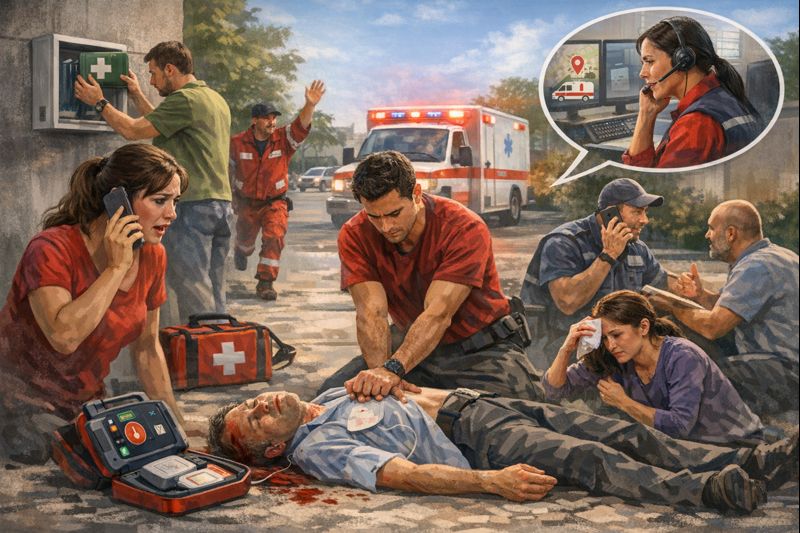
After ensuring safety for both the responder and the victim, the next step in initial management is CALL – activating the emergency medical system. In emergency medicine, this is not a “secondary” action but a vital and pivotal intervention.
What does “CALL” mean in First Aid?
CALL is the act of immediately contacting emergency services (e.g., 911, 115, 112) or activating internal emergency protocols within a workplace, factory, or school.
Objectives of CALL:
-
Shorten the time to reach specialized medical treatment.
-
Receive remote medical guidance when necessary.
-
Prepare for patient transfer and subsequent emergency care.
When to CALL immediately?
The call must be made as soon as possible when any of the following situations occur:
-
Cessation of breathing, difficulty breathing, or suspected cardiac arrest.
-
The victim is unconscious or unresponsive.
-
Severe, uncontrolled bleeding.
-
Major trauma or multiple injuries.
-
Chest pain, signs of a stroke, or prolonged seizures.
In many situations, CALLing should happen simultaneously with first aid; do not wait until you finish treatment to call.
How to CALL effectively?
1. CALL for assistance from bystanders:
In crowded environments like schools, workplaces, or public areas, calling for help effectively requires specific instructions. Be proactive and assign clear tasks:
-
One person to call emergency services and maintain communication.
-
One person to locate the nearest AED or first aid kit.
-
One person to help control the scene and maintain a safe/clear space.
-
One person to reassure the victim or their relatives.
-
One person to record the timeline and developments of the incident.
2. CALL for professional emergency services:
Communicating the right information helps the emergency team prepare the appropriate equipment and personnel from the start. Provide concise and accurate details:
-
Location of the incident.
-
Victim’s condition (consciousness, breathing, bleeding, etc.).
-
Number of victims.
-
Ongoing scene hazards (if any).
-
Call-back phone number.
CALL DOES NOT REPLACE FIRST AID
A common misconception is that “once the ambulance is called, nothing else needs to be done.” In reality, proper first aid performed while waiting for medical help can significantly improve the victim’s prognosis. CALL and CARE(initial care) must always go hand-in-hand.
In initial management, “CALLing does not end a process; it opens a chain of early interventions to optimize treatment outcomes.”
Calling for help at the right time is how a responder opens the “door to treatment” for the victim.
Consolidated by GHME