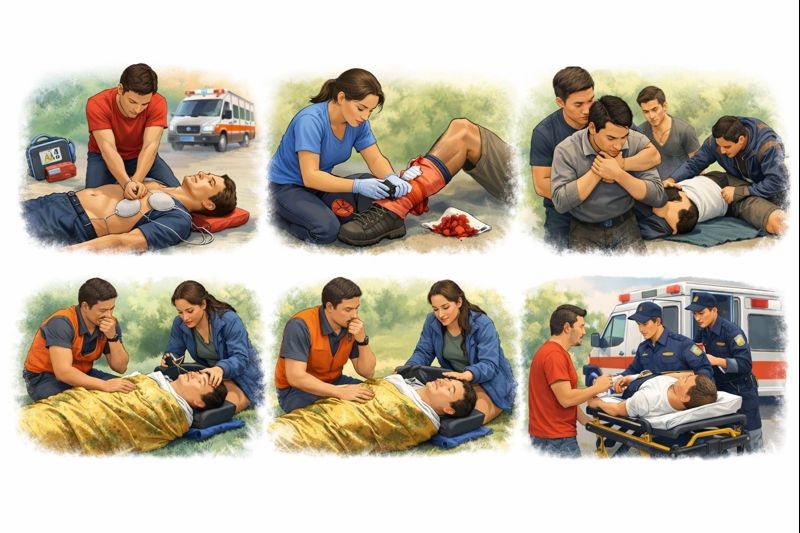

CARE is a short but decisive period. Proper initial care serves as the bridge between an incident and definitive medical treatment. Correct first aid interventions in the first few minutes can significantly impact clinical outcomes.
After ensuring safety (Check) and activating medical support (Call), the next step in initial emergency response is CARE — delivering appropriate first aid measures to stabilize the casualty while awaiting professional medical assistance.
In pre-hospital emergency medicine, CARE plays a critical role in reducing secondary injuries, extending the “golden time,” and improving patient prognosis.
What is CARE?
CARE refers to a set of first aid interventions performed correctly, at the right time, and within the responder’s level of training.
The goal of CARE is not definitive treatment, but to:
- Maintain airway, breathing, and circulation
- Prevent further deterioration
- Optimize conditions for safe medical handover
Core principles of CARE
- Perform only skills that have been properly trained
- Continuously monitor the casualty’s condition
- Remain calm and provide reassurance
- Coordinate effectively with surrounding helpers
- Be prepared to deliver clear and complete information to emergency responders
Key CARE interventions
Depending on the situation, CARE may include:
- Cardiopulmonary resuscitation (CPR) and use of an AED when indicated
- Control of life-threatening bleeding.
- Management of choking.
- Positioning the casualty in an appropriate safe position.
- Keeping the casualty warm and preventing shock.
- Monitoring breathing, level of consciousness, and circulation.
Throughout this process, the responder must reassess continuously and adjust interventions as needed.
CARE addresses both physical and psychological needs
Psychological reassurance is an essential component of CARE.
A calm voice, clear instructions, and a steady presence help reduce panic, limit unnecessary energy expenditure, and stabilize the casualty’s physiological state.
CARE is a continuous process
CARE does not end after a single intervention. The responder must:
- Observe ongoing changes.
- Identify signs of deterioration.
- Adjust care promptly.
- Maintain close coordination with assisting individuals.
CARE is not about doing more
A common mistake is attempting interventions beyond one’s training. In first aid, doing the right and sufficient actions is more important than doing many. Inappropriate interventions may cause further harm.
Medical handover – the final step of CARE
CARE is completed only when the casualty is safely handed over to medical professionals. Providing clear, concise information regarding:
- Time of the incident
- Initial condition of the casualty
- Interventions performed.
This information enables emergency teams to continue care effectively.
CHECK – CALL – CARE: Acting correctly when every minute counts