
 vivi
vivi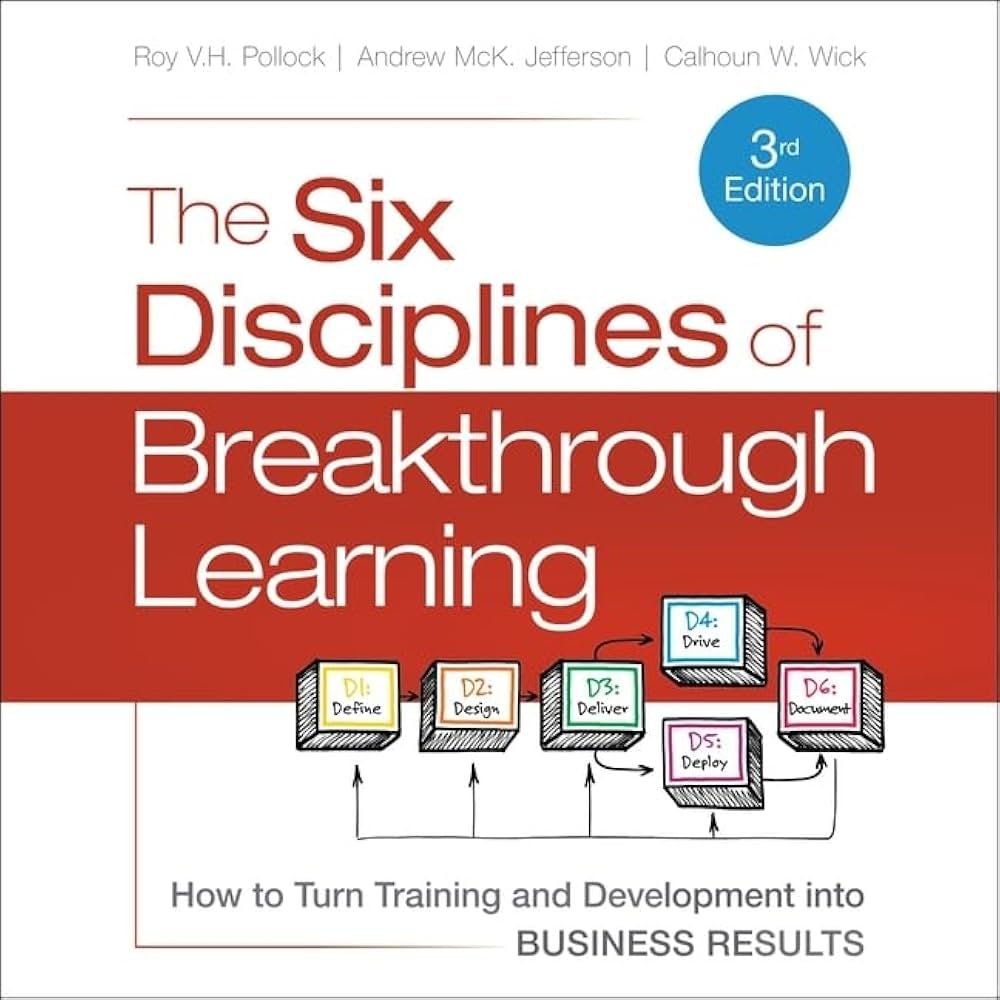
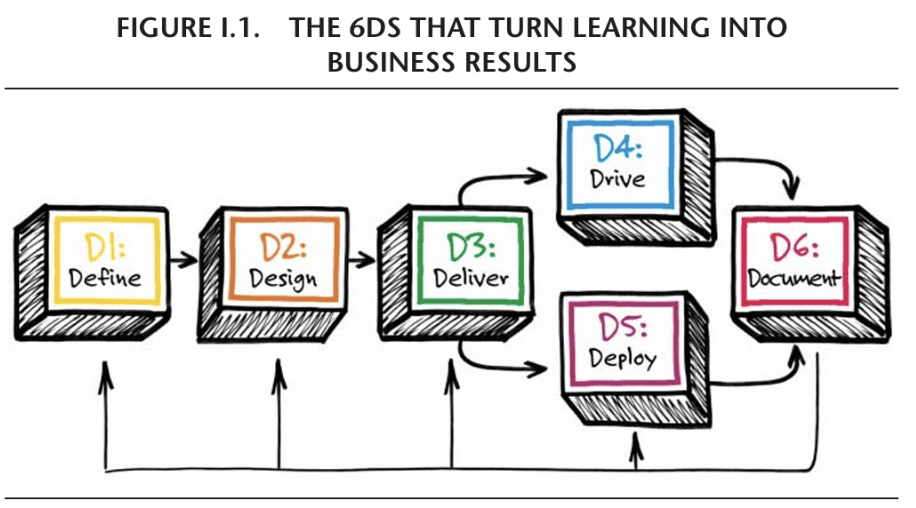
We introduce The Six Disciplines of Breakthrough Learning book by Wick, Pollock, Jefferson, & Flanagan, 2006) and updated in a second edi tion four years later by Wick, Pollock, & Jefferson, 2010. We chose a name that started with a“D”for each discipline to make them easier to remember and apply. They have subsequently become known as the 6Ds® (FigureI.1).
Many organizations throughout the world have adopted the Six Disciplines as the organizing principles for their training and development efforts. The 6Ds have proven to be a powerful and enduring approach to defining, designing, delivering, and assessing corporate learning. This third edition of The Six Disciplines of Breakthrough Learning has been exten sively revised to incorporate new insights, research, and best practices. It includes the checklists we developed for the 6Ds Workshops (Pollock, Jefferson, & Wick, 2013) andTheField Guide to the 6Ds (Pollock, Jefferson, & Wick, 2014)
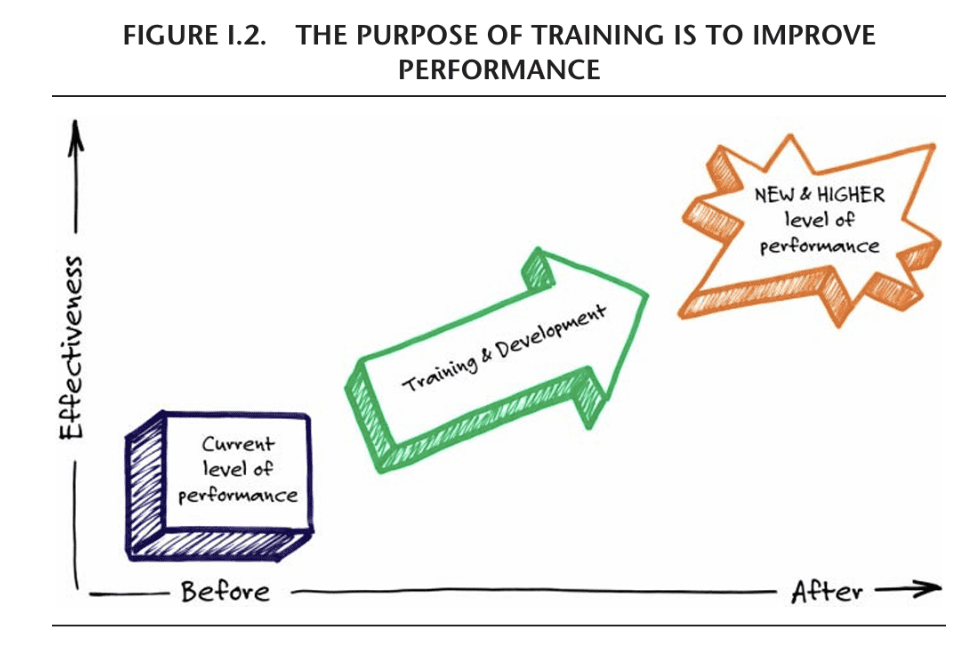
This book is about optimizing the planned training that organizations, typically companies, provide for their employees. We will often use the word “training” to refer to an intentional effort to teach people how to do something, since the term is still widely used and understood. By “training” we mean purposeful efforts to teach people how to perform job roles in which the requisite skills are well understood—for example, sales, customer service, supervision, safe work practices, and so forth . The 6Ds are designed to maximize the business value of the intentional learn ing opportunities provided for employees—regardless of when or where those occur, through what medium, or by what method.
Training Is More Important Than Ever
The need for training has never been greater especially in high-growth markets Young managers are being buoyed along by the rapidly rising tide of growth. They are often promoted without adequate training or experience for their new roles. Inmany cases, they don’t know what they don’t know.That Increases their risk of failure, which hurts their careers, the people who work for them, and
The organization as a whole. We are also seeing more and more young people coming into theworkforce who are not adequately prepared to succeed in business. Although they are often university-educatedandtech-savvy,theyarenotindustry-ready. Many lack the background knowledge, work habits, and social skills their employers need.
When Is Training the Answer?
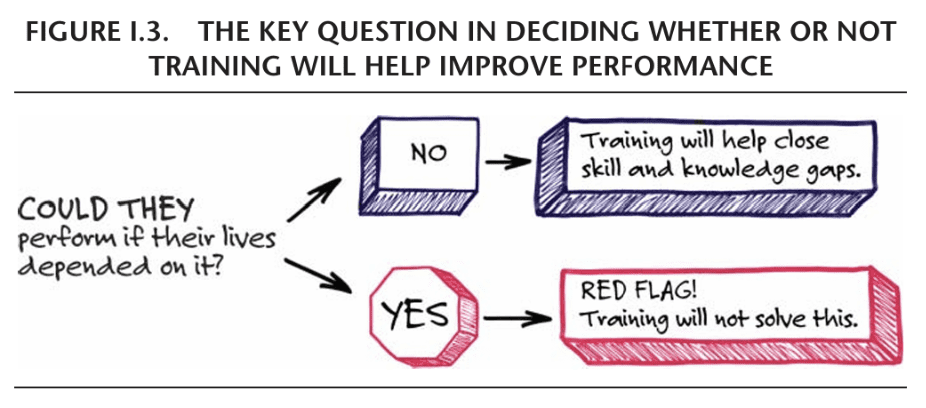
This book is about maximizing the value of performance improvement efforts that involve learning and development. That is not to say, however, that training is the only path to performance improvement or necessarily the best path.
The problem is that many managers see training as the solution to every sort of performance challenge, even when the real issues lie elsewhere.
The point is that the first and most important decision that needs to be made is whether or not training is an appropriate solution. If it is the wrong solution, then it won’t work, no matter how well it is designed and executed. If a lack of skills or knowledge contributes to the performance gap, then use the 6Ds to design, deliver, and document the results of a planned learning intervention. If the real issue is in the environment, working processes, or performance management system, help management address the real issues and don’t waste resources on training.
Learning and the Moment of Truth
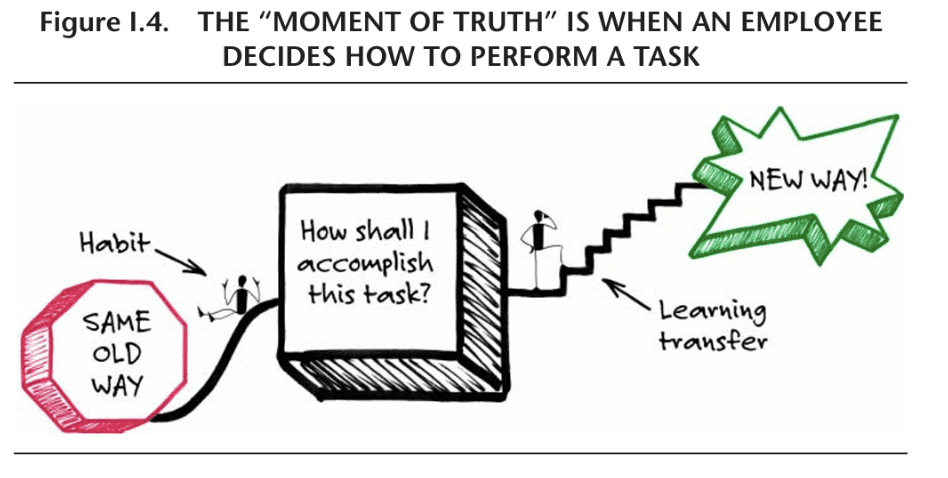
The moment of truth occurs when an employee has the opportunity to apply the new knowledge and skill in the course of his or her work. Employees have two choices (Figure I.4): com plete the task in the new way they just learned, or continue to perform as before (same old way), which might be to do nothing at all. If they choose to perform in the new (andpresumably better) manner, then the learning creates value. If they persist (or revert) to performing in the way that they had previously, then the learning is of no value, perfor mance won’t improve, and the investment in learning was a waste of time and resources.
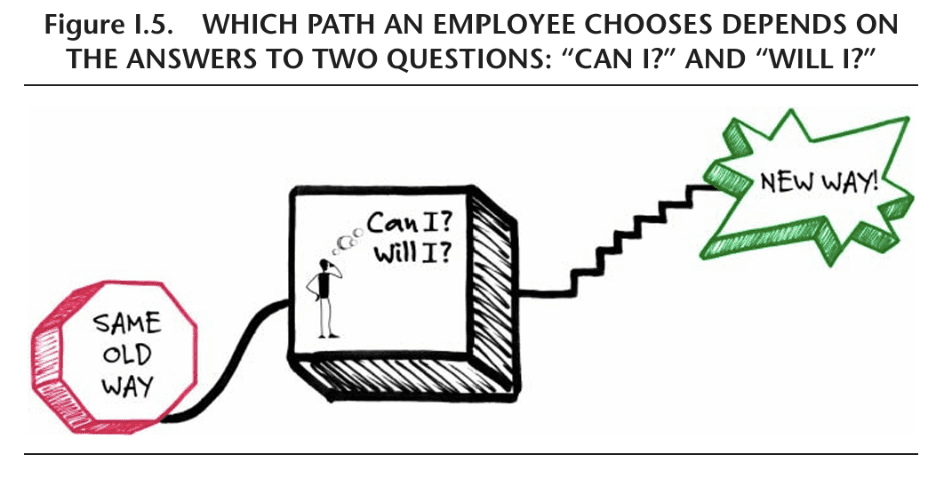
Which path an employee chooses depends on the answers to two crit ical questions: “Can I do it the new way?” and “Will I make the effort?” (Figure I.5). It makes no difference how much an employee learned or how the knowledge was obtained; unless he or she answers “Yes, I can” and “Yes, I will” at the moment of truth, the learning adds no value to the organization.
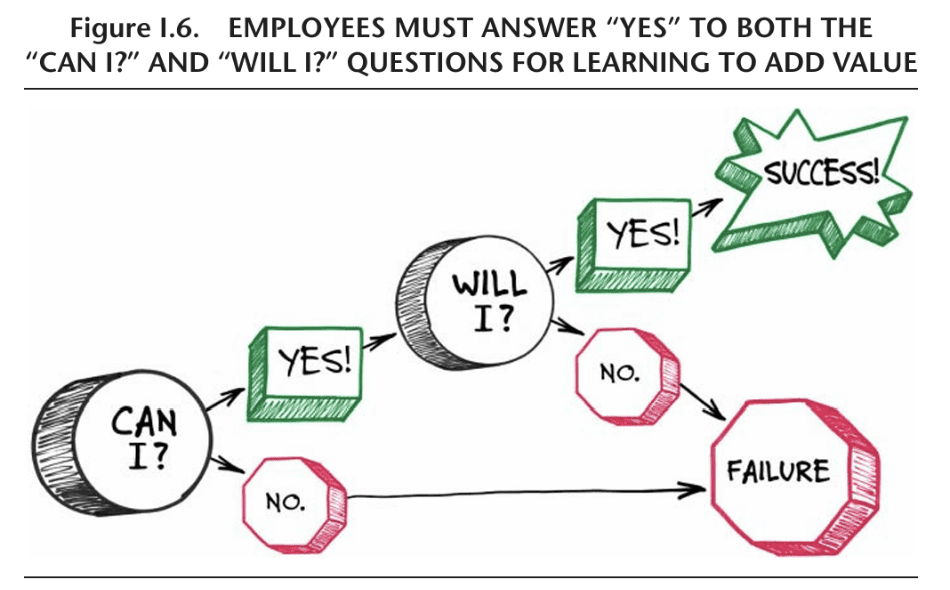
Corporate-sponsored learning needs to be conceived, designed, and delivered in the right way, at the right time, to the right audience, in a conducive work environment to ensure that both the“Can I?”and“Will I?” questions are answered in the affirmative(FigureI.6). Otherwise,the effort is a failure and the learning is just a pile of scrap.
Learning Scrap
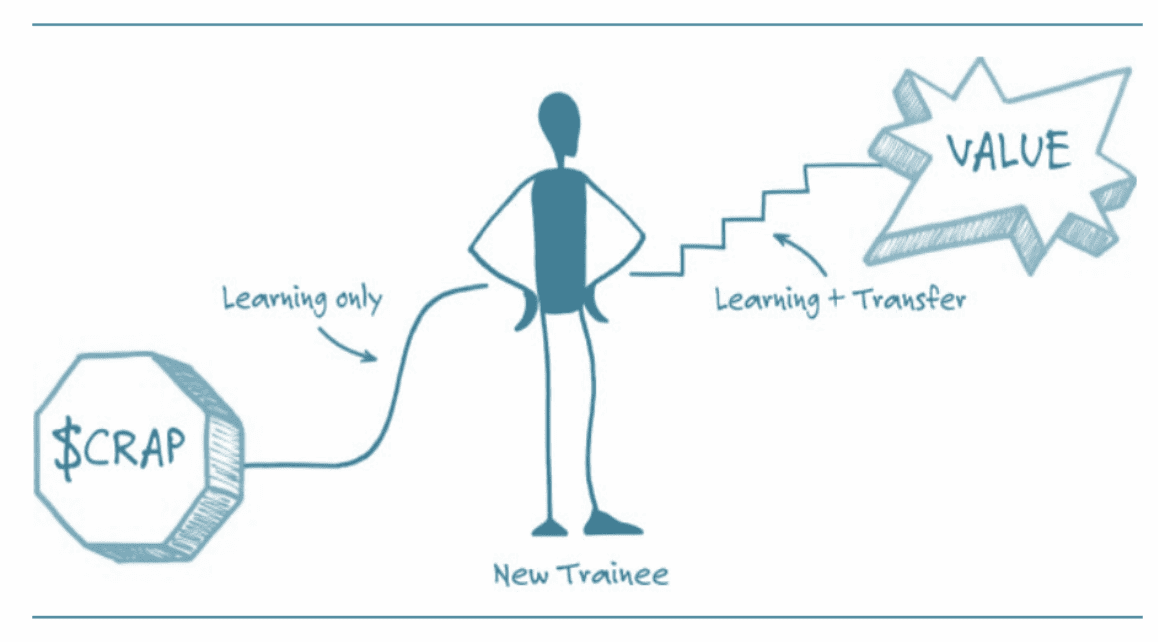
Learning scrap—like manufacturing scrap—is expensive. It puts a company at a competitive disadvantage. The costs are similar (Table I.3). Learning scrap squanders the tangible costs of labor (of both trainers and trainees), travel, materials, technology, vendors, and so forth, as well as the opportunity costs of having people waste time in programs learning things they cannot or will not use.
Corporate-sponsored learning needs to be conceived, designed, and delivered in the right way, at the right time, to the right audience, in a conducive work environment to ensure that both the“Can I?”and“Will I?” questions are answered in the affirmative(FigureI.6). Otherwise,the effort is a failure and the learning is just a pile of scrap.
Learning Scrap
Learning scrap—like manufacturing scrap—is expensive. It puts a company at a competitive disadvantage. The costs are similar (Table I.3). Learning scrap squanders the tangible costs of labor (of both trainers and trainees), travel, materials, technology, vendors, and so forth, as well as the opportunity costs of having people waste time in programs learning things they cannot or will not use.
Without transfer, learning is scrap; it consumes resources but produces no value
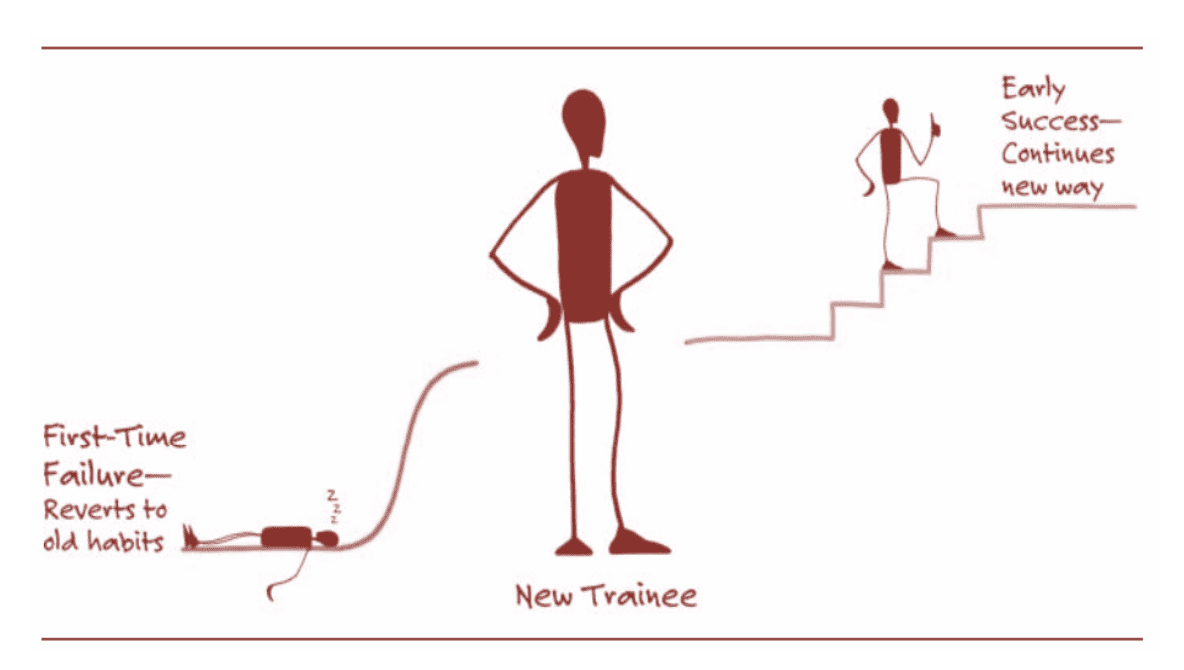
If employees experience early success, they are motivated to continue; If employees experience early failure, they are likely to give up. Let’s do baby step.
Consolidated by HCX Coaching