Stroke: Pathophysiology – Epidemiology – Emergency Management & Prevention
Abstract
Stroke, including ischemic and hemorrhagic types, remains the second leading cause of death and a major cause of long-term disability worldwide. Vietnam reports over 220,000 new cases annually. The rising incidence in adults under 55 underscores the need for early recognition, timely reperfusion, and comprehensive prevention. This summary highlights key pathophysiological mechanisms, the Penumbra concept, emergency actions, pre-hospital care, and evidence-based prevention.
1. Epidemiology & Trends
-
Global mortality: 6.6 million deaths in 2020 → projected 9.7 million by 2050.
-
DALYs increasing, especially in low–middle income countries.
-
Vietnam: >220,000 cases/year, mortality ~11%.
-
Rising rates in younger adults (<55) due to hypertension, diabetes, obesity, smoking, and dyslipidemia.
2. Core Pathophysiology
Classification
-
Ischemic stroke (87%): thrombotic or embolic occlusion.
-
Hemorrhagic stroke: vessel rupture → mass effect.
Core – Penumbra:
-
Infarct core: irreversible injury.
-
Penumbra: salvageable tissue if reperfusion is timely.
Secondary injury:
-
-
Inflammation and brain edema.
-
Electrolyte disturbances: ischemia → hyponatremia; hemorrhage → hyperkalemia.
-
Calcium toxicity and enzymatic cell death.
-
3. Early Recognition: FAST
-
F: Facial drooping
-
A: Arm weakness
-
S: Speech difficulty
-
T: Time to call EMS
Record “Last Known Well” time.

4. Acute Management
-
IV thrombolysis: within 3–4.5 hours.
-
Mechanical thrombectomy: for large vessel occlusion, image-guided selection.
-
Delay leads to Penumbra loss and increased mortality.
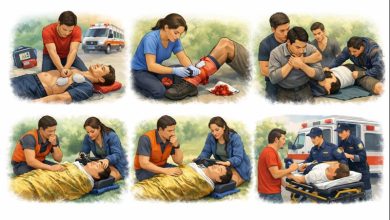
5. Pre-Hospital Protocol: CHECK – CALL – CARE

6. Prevention
-
Blood pressure control is paramount.
-
DASH diet, low sodium, high fiber.
-
150 minutes of exercise/week.
-
Stop smoking; limit alcohol.
-
Control glucose and lipids; adhere to medications.
-
Anticoagulation for atrial fibrillation when indicated.
7. Rehabilitation
-
Start early post-acute phase.
-
Multidisciplinary: PT, OT, speech therapy, nutrition, psychology.
-
Goal: maximize functional recovery and reduce long-term disability.
Consolidated by GHME